
Mediix | Healthcare Recruitment Agency Australia

How to Register as an Occupational Therapists in Australia

If you’re an internationally qualified Occupational Therapist (OT) looking to work in Australia, the registration process has recently changed.
The good news? The pathway is now more streamlined – but it’s still important to understand each step clearly to avoid delays.

Expedited Pathway for Overseas GPs & Specialists — A Faster Route to Practise in Australia (2026 Update)
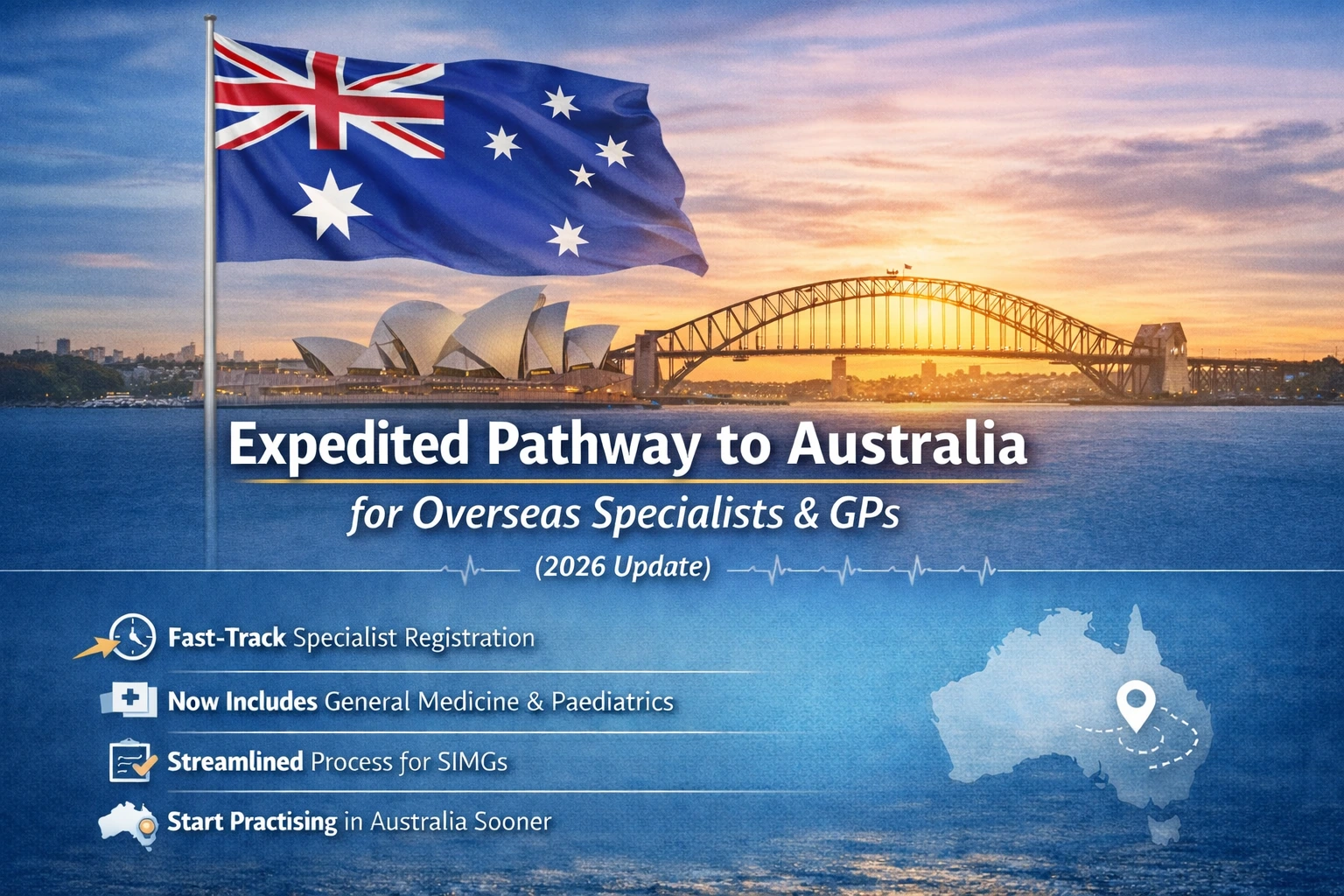
If you’re an overseas-trained doctor thinking about relocating to Australia — especially as a GP or specialist — there’s good news: the Expedited Specialist Pathway is now open and helping highly qualified international medical graduates fast-track registration and begin practising sooner. This initiative reflects Australia’s urgent need for medical professionals while still maintaining high standards of patient safety and clinical competence. Let’s break down what this pathway is all about, who it’s for, and how it works in a friendly, practical way. Why the Expedited Pathway Exists Australia’s health system continues to face significant workforce shortages, particularly in rural and regional settings. To help address these gaps, the Expedited Specialist Pathway was introduced as a streamlined route for qualified overseas doctors to gain specialist registration with the Medical Board of Australia. The aim isn’t to cut corners — it’s to reduce red tape and unnecessary delays while still making sure doctors are safe, capable, and ready to work in the Australian system. Who Is Eligible? You may be eligible if: ✔ You are a Specialist International Medical Graduate (SIMG) ✔ You have a specialist medical qualification that is recognised on the Medical Board’s Expedited Specialist Pathway accepted qualifications list ✔ Your primary medical qualification is recognised by the Australian Medical Council (AMC) and the World Directory of Medical Schools Here’s a summary of the qualifications accepted for eligibility in the Expedited Specialist Pathway, based on the official Medical Board of Australia list (as at early 2026): 1. General Practice United Kingdom Membership of the Royal College of General Practitioners (MRCGP) plus Certificate of Completion of Training (CCT) from GMC or PMETB (training under an approved UK GP specialist program since August 2007) Ireland Membership of the Irish College of General Practitioners (MICGP) plus Certificate of Satisfactory Completion of Specialist Training (CSCST) (under an accredited Irish GP program since 2009) New Zealand Fellowship of the Royal New Zealand College of General Practitioners (FRNZCGP) (awarded under the General Practice Education Programme – GPEP) These qualifications must meet the Board’s requirements and include evidence of completion of recognised GP specialist training. 2. Anaesthesia Ireland Fellowship of the College of Anaesthesiologists of Ireland (FCAI) plus Certificate of Satisfactory Completion of Specialist Training (CSCST) (from an approved Irish anaesthesia program since July 2012) United Kingdom Fellowship of the Royal College of Anaesthetists (FRCA) plus Certificate of Completion of Training (CCT) (from an approved UK training program since August 2007) Additional requirement: completion of an Effective Management of Anaesthetic Crisis (EMAC) course, as recommended by the Australian and New Zealand College of Anaesthetists, may be required. 3. Obstetrics & Gynaecology Ireland Membership of the Royal College of Physicians of Ireland (MRCPI) plus Certificate of Satisfactory Completion of Specialist Training (CSCST) (in obstetrics & gynaecology from an accredited Irish programme since July 2010) Includes evidence of relevant examinations United Kingdom Membership of the Royal College of Obstetricians and Gynaecologists (MRCOG) plus Certificate of Completion of Training (CCT) (from an approved UK programme since August 2007) Additional procedural requirements (e.g. colposcopy training) may be needed for full Australian practice. 4. Psychiatry United Kingdom Membership of the Royal College of Psychiatrists (MRCPsych) plus Certificate of Completion of Training (CCT) (awarded under any MRCPsych-approved curriculum from August 2007 to date, following satisfactory completion of a GMC- or PMETB-approved psychiatric specialist training programme) This means UK-trained psychiatrists with MRCPsych + CCT are currently eligible for the Expedited Specialist Pathway. Psychiatrists trained outside the UK must still go through standard specialist assessment with the Royal Australian and New Zealand College of Psychiatrists unless their qualification appears on the Board’s accepted list. 5. General Medicine Ireland Fellowship / Membership of the Royal College of Physicians of Ireland (RCPI) plus Certificate of Satisfactory Completion of Specialist Training (CSCST) (in General Internal Medicine from an accredited Irish physician training programme) Includes evidence of completion of all required examinations and recognised specialist training. United Kingdom Membership of the Royal Colleges of Physicians of the United Kingdom (MRCP(UK)) plus Certificate of Completion of Training (CCT) (in General Internal Medicine from a GMC-approved UK training programme) Applicants must demonstrate completion of recognised General Medicine specialist training consistent with Australian scope of practice. 6. Paediatrics (General Paediatrics) Ireland Membership of the Royal College of Physicians of Ireland (MRCPI Paediatrics) plus Certificate of Satisfactory Completion of Specialist Training (CSCST) (in Paediatrics from an accredited Irish paediatric training programme) Includes evidence of relevant paediatric examinations and completion of recognised specialist training. United Kingdom Membership of the Royal College of Paediatrics and Child Health (MRCPCH) plus Certificate of Completion of Training (CCT) (in Paediatrics from a GMC-approved UK training programme) Scope of practice is General Paediatrics. Subspecialty practice may require additional credentialing or assessment in Australia. How the Expedited Pathway Really Works The pathway is designed to be faster and more direct than traditional specialist pathways. Here’s a simplified overview of the process: 1. Primary Source Verification Your medical degrees and qualifications must be verified through the AMC/EPIC system — just like other IMG pathways. 2. Check the Approved Qualification List Confirm your specialist qualification is on the Medical Board’s Expedited Specialist Pathway list before applying. 3. Apply to the Medical Board You submit your application directly for specialist registration through AHPRA / the Medical Board — no need for lengthy specialist college comparability assessments first. 4. Supervised Practice Once granted conditional specialist registration, you must complete six months of supervised practice in Australia. This includes: Supervised clinical work Orientation to the Australian healthcare system Cultural safety education Workplace-based assessments (Mini-CEX, DOPS, or case-based discussion) 5. Conditions Removed After meeting all requirements, you apply to the Board to have conditions removed and continue practice independently as a fully registered specialist. Why This Pathway Matters For overseas doctors, the traditional specialist registration process could take many months — sometimes over a year — before you can actually work clinically. The expedited pathway significantly shortens that timeline by removing redundant steps while still ensuring quality and safety. It’s especially meaningful if: You want… Continue reading Expedited Pathway for Overseas GPs & Specialists — A Faster Route to Practise in Australia (2026 Update)

Australia’s Physiotherapy Jobs Boom in 2026 — Where Opportunities Are Growing Fast

Australia Needs Physiotherapists Now More Than Ever! If you’re a physiotherapist exploring your next career move in 2026, you’re entering one of the strongest job markets in recent years. With an aging population, rising chronic conditions, expanding community care services, and workforce shortages across major states — demand for skilled physiotherapists is surging. Australia’s market now employs nearly 46,000+ physiotherapists, and roles continue to grow across clinical, hospital, community, and locum settings.  Whether you’re seeking your first role, looking to specialise, or considering locum work, understanding where the jobs are and what you can earn makes all the difference. What Physiotherapists Are Earning in 2026? According to 2026 salary reporting: Average physiotherapist salary in Australia: ~$90,000 per year.  Typical range: $75,000–$113,000+ depending on experience and location.  Entry to mid-career physios in metropolitan clinics commonly earn in the $80k–$95k range.  Some specialised or senior roles exceed $110,000+.  Casual and locum roles — particularly in regional and FIFO assignments — can command even higher effective rates when flexibility and salary packaging are included.  State-by-State Job Trends New South Wales (NSW) NSW continues to expand allied health hiring both in urban and regional centres: Strong demand across Sydney, Newcastle, Central Coast and regional hubs like Dubbo and Wagga. Government initiatives now include student support programs designed to encourage graduates into underserved areas.  Locum and contract roles feature salary packaging incentives (e.g., tax-free allowances).  Trend Insight: Urban clinics seek musculoskeletal and sports physios, while regional services face chronic shortages — creating opportunities for bonus-level pay and relocation support. Victoria (VIC) Melbourne and regional Victoria are hiring across public and private sectors: Locum physiotherapist roles with hourly rates between $55–$75+, plus salary packaging.  Regional practices in Ballarat, Bendigo, Geelong, and Gippsland are growing workforce needs rapidly. Trend Insight: Victorian healthcare networks increasingly value flexible placements that help cover gaps without long-term commitments — ideal for locum physios. Queensland (QLD) Queensland’s Sunshine Coast, Cairns, and Townsville markets continue expanding: Growing aged care and community rehabilitation sectors fueling demand. Allied health roles often advertise salaries competitive with metro rates.  Trend Insight: QLD regional centres are actively recruiting physiotherapists with a range of specialty interests — from pain management to sports and neuro rehab. Why Demand Is Rising? Australia’s physiotherapy demand isn’t temporary — it’s structural: Aging demographics are increasing chronic disease and mobility issues.  Rapidly growing population. Preventive care and rehabilitation services are expanding in private and public settings.  Locum and short-term contracts help fill workforce gaps while offering clinicians flexibility.  At Mediix, we specialise in matching physiotherapists with roles that fit your lifestyle, clinical interests, and career goals. Explore opportunities today and take advantage of Australia’s hottest allied health market.  Let’s chat! – inquiry@mediix.com.au

FIFO Locum GP Jobs in Australia: A Complete Guide

FIFO GP roles are becoming one of the most popular ways for doctors to work flexibly in Australia without sacrificing income, clinical challenge, or lifestyle. If you’ve heard the term FIFO GP but aren’t quite sure what it really looks like in practice, this guide breaks it down clearly and honestly. What Is a FIFO GP? A FIFO GP (Fly-In, Fly-Out General Practitioner) is a doctor who travels to a specific location – usually regional, rural, or remote – to work for a defined block of time, then flies home for an extended break. Instead of relocating permanently, FIFO GPs work on structured rosters that provide certainty, balance, and flexibility. FIFO GP roles are commonly found in: Mining and resources sites Remote and very remote communities Regional clinics and health hubs Occupational and on-site medical services Aboriginal Medical Services Urgent Care Centres For many doctors, FIFO work is a way to access interesting, well-paid roles while staying anchored to home. What Does a FIFO GP Actually Do? The clinical scope varies depending on the site, but FIFO GP work typically includes: Primary care and acute presentations Occupational health and injury management Emergency response and initial stabilisation (site-appropriate) Preventative health checks and chronic disease reviews Managing a wide mix of undifferentiated cases Most FIFO roles are well supported, with: Clear clinical protocols Experienced nursing teams On-site equipment Defined escalation and retrieval pathways You’re rarely working in isolation – support structures are built into most FIFO services. The Biggest Drawcard: Flexibility One of the main reasons GPs choose FIFO work is the ability to design their year around life, not just work. Common FIFO GP roster options include: 2 weeks on / 2 weeks off 4 weeks on / 2 weeks off Block work over several months, followed by extended leave Mixing FIFO blocks with metro, regional, or other locum GP roles This structure allows many GPs to: Plan their entire year well in advance Take extended time off without negotiating leave Travel regularly between contracts Balance periods of high clinical intensity with real downtime For some doctors, FIFO becomes a long-term lifestyle choice. For others, it’s the perfect medium-term strategy. Benefits of Working as a FIFO GP Strong Earning Potential FIFO GP roles generally offer higher daily rates, reflecting location, roster structure, and scope of practice. Clear Boundaries No ongoing patient lists. No after-hours admin. No follow-ups while you’re on leave. Variety and Clinical Exposure FIFO work offers hands-on experience across general practice, acute care, and occupational medicine — often in settings where your skills genuinely matter. No Permanent Relocation You get the benefits of regional and remote medicine without uprooting your family or committing to a long-term move. Lifestyle Freedom FIFO suits GPs who value: Travel Family time Study or portfolio careers Personal projects Semi-retirement or phased workloads Who Is FIFO GP Work Best Suited To? FIFO GP roles can be a great fit for: Experienced GPs seeking variety or flexibility Doctors transitioning out of full-time clinic work GPs wanting defined work blocks with longer breaks Those interested in rural, remote, or occupational medicine Doctors looking to maximise income without relocating The key is matching the right site and roster to your clinical comfort level and lifestyle goals – something we focus on heavily at Mediix. Is FIFO GP Work Right for You? FIFO GP work isn’t about working more. It’s about working differently. If you value structure, autonomy, and the ability to plan months ahead, FIFO can offer a level of freedom that traditional general practice often can’t. Whether you want to: Work intensively for part of the year Create space for travel or family Explore new clinical settings without relocating FIFO GP work is a flexible, rewarding option worth considering. Thinking About FIFO Locum GP Work? At Mediix, we work closely with GPs to match the right FIFO role – clinically, financially, and lifestyle-wise. If you’d like a confidential chat about current FIFO GP opportunities across Australia, get in touch us – inquiry@mediix.com.au

Hospital Doctor Hierarchy in Australia
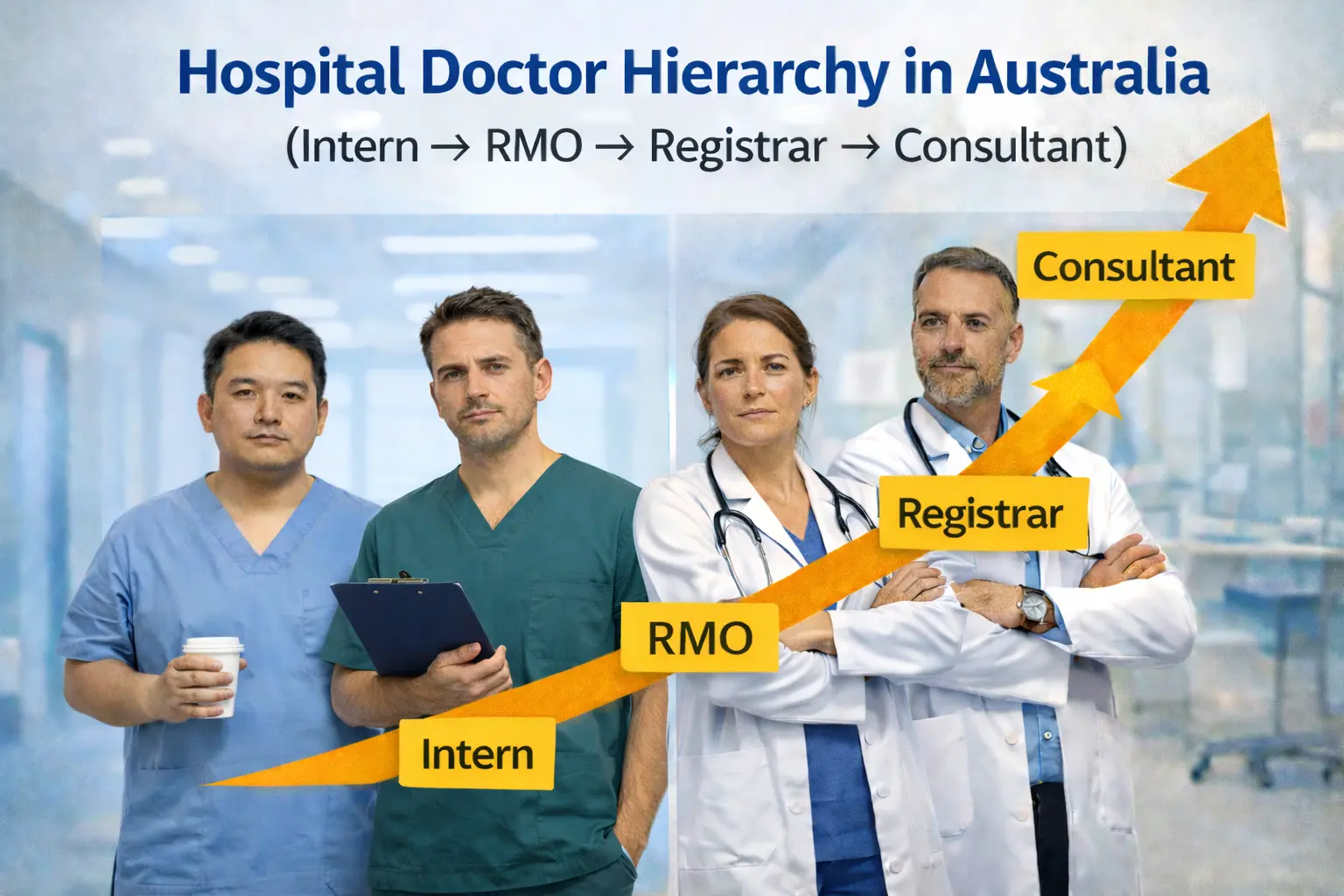
If you’ve ever heard someone say “I’m an RMO” and thought …cool, but what does that actually mean? Australian hospitals are pretty consistent in how roles are structured, but the job titles can vary slightly by state (and even by hospital). Here’s a clear guide to what each level means and what hiring teams are usually looking for. The quick version (doctor ladder) Most hospital doctor roles sit in this order: Intern (PGY1) Resident / RMO / HMO (usually PGY2–3) Senior Resident / SRMO / PHO (varies by state) Registrar (unaccredited or accredited trainee) Fellow / Senior Registrar (common in some specialties) Consultant / Staff Specialist / VMO Intern (PGY1): “Supervised, structured, learning hard” This is your first year after medical school, usually via an intern training program. Typical intern work: ward jobs (orders, plans, discharge summaries) basic procedures (depending on term) referrals + chasing results learning hospital systems  Registration note: Interns usually hold provisional registration and transition to general registration after completing internship requirements.  Resident / RMO / HMO (PGY2+): “More independence, still supported” This is the stage where you’re commonly called: RMO (Resident Medical Officer) in most states  HMO in (Victoria)  What you’ll do as an RMO/HMO: manage patients day-to-day on the wards cover after-hours shifts (nights/weekends depending on roster) escalate clinical concerns appropriately build speed + confidence with documentation and prioritisation Hiring teams love RMO/HMOs who: are safe and escalate early when needed communicate clearly (especially with nursing + allied health) write clean, timely notes are reliable on roster and handover SRMO / PHO: “Bridging into registrar level” You’ll see titles like: SRMO (Senior Resident Medical Officer) PHO (Principal House Officer — common in QLD) “Senior HMO” (some networks) These roles often mean: more leadership in the team heavier after-hours responsibility stepping closer to registrar expectations If you’re aiming for training later, this is a really strategic year to build a CV that “makes sense”. Registrar: “Now you’re running the show (with consultant backup)” Registrar roles come in a few flavours: 1. Unaccredited registrar You’re working at registrar level, but not in a formal college training spot (yet). 2. Accredited trainee (on a college program) You’re officially in a training pathway (requirements depend on specialty/college). 3. Service registrar Role is primarily service-driven (can still be great experience – just be clear whether it counts toward training). Typical registrar responsibilities: managing referrals and triage leading junior staff day-to-day complex decision-making + escalation supervising interns/RMOs planning discharges and coordinating care Fellow / Senior Registrar: “Polishing skills before consultant” Common in: physician specialties ED subspecialty areas ICU some surgical subspecialties Often includes: advanced clinical scope teaching/leadership audits/research readiness for independent specialist practice Consultant / Staff Specialist / VMO: “Final clinical decision-maker” This is the senior role – the person who signs off management plans and carries ultimate responsibility. Terminology can vary: Staff Specialist (common in public hospitals) VMO (Visiting Medical Officer, often in private or mixed models) Helpful official links Medical Board of Australia: Interns + requirements (medicalboard.gov.au) Medical Board: Provisional → General registration process (medicalboard.gov.au) Medical Board: Types of medical registration (medicalboard.gov.au) AHPRA: Applying for registration (AHPRA) AHPRA: International practitioners info (AHPRA) Queensland Health: Medical career structure (Careers) NSW Health: JMO glossary (titles explained) (NSW Health) AMA: Pathways in Medicine (RMO/registrar overview) (Australian Medical Association)

Public vs Private Hospitals in Australia: What’s Actually Different?

If you’re choosing between public and private hospital work (or trying to plan your next move), it helps to know one thing upfront: They can both be great… but they’re great for different reasons. And yes — sometimes the “best choice” is doing both at different stages of your career. First: what’s the basic difference? Australia has both public and private hospitals. Public hospitals are mainly owned/managed by state/territory governments, with funding also coming from the Australian Government.  Private hospitals are owned/managed by private organisations (some not-for-profit), and are funded largely through private health insurance payments + patient charges, plus some government contributions.  That funding model shapes everything: the case mix, the workflow, the rosters, and often the culture. The big-picture comparison (real-world, doctor-focused) Public hospitals tend to be: heavier on acute + complex care bigger teams (JMOs, registrars, consultants, allied health) more structured training environments more after-hours + on-call coverage (depending on department) They’re also the “training engine” for many specialties (especially for junior and registrar roles). Private hospitals tend to be: more elective-focused (depending on specialty) more predictable lists in some areas sometimes less overnight chaos (again: varies widely) a different “model” of specialist work (often VMOs) Junior doctors: where do you usually fit best? If you’re an Intern / RMO / HMO: Most junior doctor training and rotation structure is in the public system (not always, but commonly). You’ll usually get: more varied rotations busier after-hours experience stronger exposure to escalation pathways and multidisciplinary care When private can still work as a junior: specific roles in private networks with good supervision ED-adjacent or rehab roles when you’re prioritising lifestyle and the role is clearly structured Mediix suggestion: If your goal is registrar training later, pick roles that give you: ED/ICU exposure (even if not your final specialty) strong consultant referees clear evidence of safety + escalation Registrars: training vs service vs lifestyle Public system (registrars) Often best for: accredited training pathways high acuity and breadth teaching opportunities and audits/QI Private system (registrars / senior roles) Can be good for: elective-heavy experience procedural exposure (specialty-dependent) different pace and continuity of care Key question to ask in interviews: “Will this role count toward training requirements?” Because “good experience” and “accredited training time” are not always the same thing. Consultants: Staff Specialist vs VMO If you’re consultant-level, you’re often deciding between: public salaried stability (staff specialist) VMO contracting (often combined with private practice) Rosters & workload: what changes most? This varies by specialty and hospital, but generally: Public tends to mean: more after-hours obligations in many departments larger rosters and rotating teams more acute escalation and bed-flow pressure Private tends to mean: more scheduled / elective work (often) different on-call patterns a different admin rhythm (admissions, theatre lists, insurance-related processes) Money and “feel” of the job Not every role is comparable — a public ICU job and a private elective orthopaedics job are different universes. Instead of guessing, compare roles using these 5 filters: The “compare offers properly” checklist What are the actual hours (and how often is after-hours)? Who is the escalation support after-hours? What is the case mix (acute vs elective vs rehab)? What are the training/CPD supports (if relevant)? Who are the referees you’ll gain in 6–12 months? If you can answer those five, you’ll make a much better decision than “public vs private” as a concept. So… which one should you choose? Here’s a simple guide: Choose public if you want: breadth, acuity, and training exposure structured rotations and teaching faster growth through complexity Choose private if you want: more elective / planned workflow (often) consultant practice models like VMO work a different lifestyle rhythm (role-dependent) Choose a mix if: you’re building skills in public and adding private experience strategically you want broader exposure for future options Would you like Mediix to help you choose right role? – send an email to inquiry@mediix.com.au

Substantially vs Partially Comparable (What It Actually Means for Jobs)
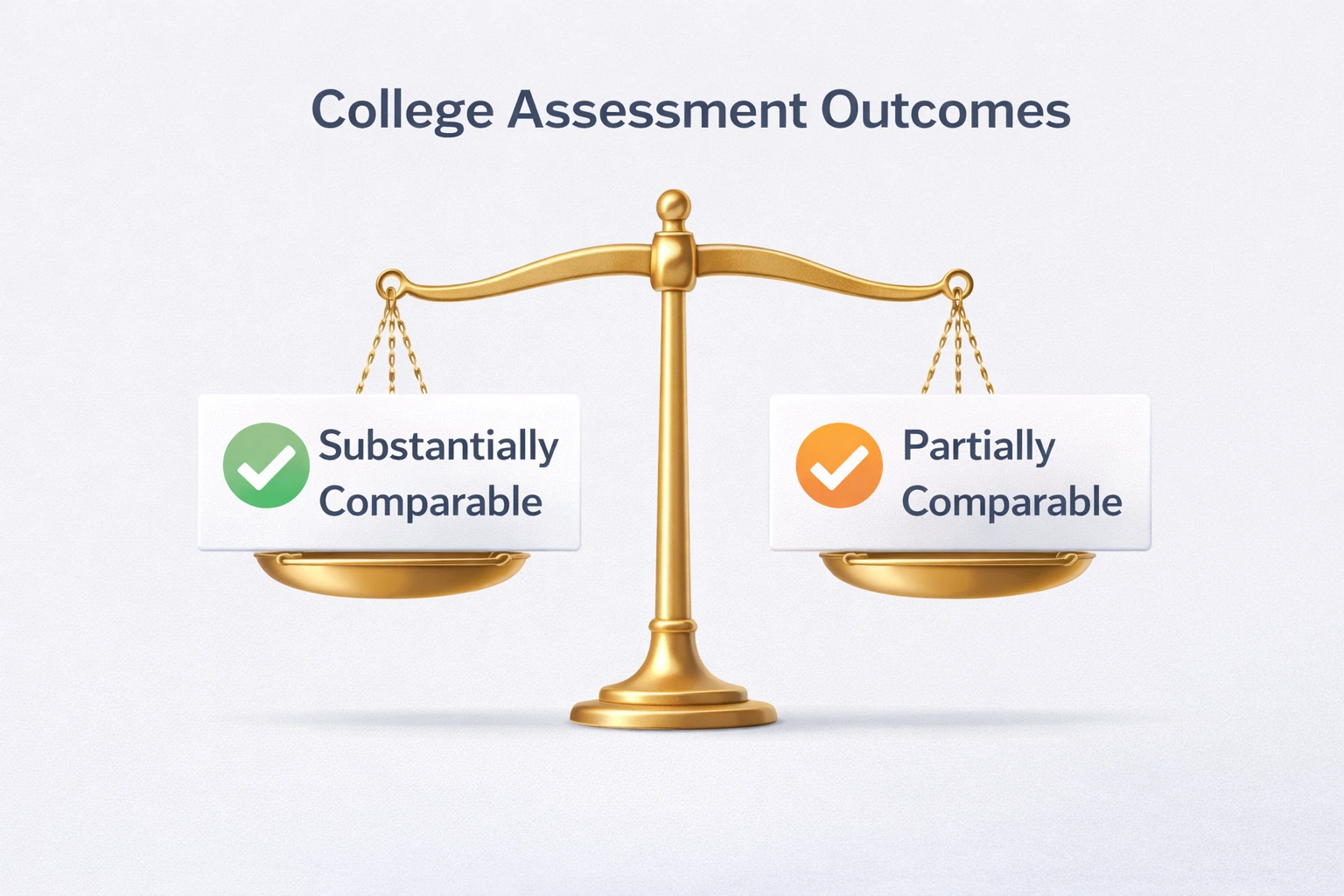
If you’re an overseas-trained specialist applying to work in Australia via the Specialist Pathway (SIMG), there are two phrases you’ll almost certainly hear after your college assessment: Substantially Comparable (SC) Partially Comparable (PC) They sound similar but they are not the same in practice and depending on which one you receive, your job options, supervision needs, and timelines can look very different.  1. What does Substantially Comparable really mean? Being assessed as Substantially Comparable generally means the college considers you to be at a level similar to an Australian-trained specialist who’s just starting independent practice. You’re almost there — but not quite finished yet. Under the national Specialist Pathway guidance, substantially comparable doctors are usually required to complete up to 12 months FTE of supervised practice or peer review under a college-approved supervisor. What this usually looks like in real life You may work in a very senior role, sometimes with consultant-level duties. You still have peer review or supervision, even if day-to-day work feels quite independent. The focus isn’t clinical skills alone — it’s about: practising safely in the Australian system understanding local guidelines and escalation culture documentation, communication, and governance expectations Once you complete the peer review successfully, you can progress toward specialist registration. Think of SC as: “You’re trusted — now show us you can do it safely in the Australian context.” 2. What does Partially Comparable mean? Partially Comparable means the college believes you can practise safely within a defined scope, but you still need more time, supervision, and often top-up training before you’re equivalent to an Australian-trained specialist. Under Specialist Pathway guidance, partially comparable doctors may need up to 24 months FTE of supervised practice. What this usually looks like in real life You’re not yet suitable for fully independent consultant roles. You’ll usually target: registrar or senior registrar roles DMO or fellow positions  Your job must: match your defined scope of practice allow you to complete any required assessments or training meet college and Medical Board requirements Think of PC as: “You’re safe and capable — now let’s build you up to full comparability.” 3. The tricky part – securing a suitable position It takes time and it may be harder then you think! Even if you’re assessed as SC or PC, you still need to secure a suitable position to progress through the pathway and “suitable” doesn’t just mean any job that looks interesting. In practice, it means: the hospital or service can provide a college-approved supervisor the role clearly matches your scope and outcome there’s proper governance, reporting, and oversight the position genuinely supports your Specialist Pathway requirements This is where many applications fall over — not because the doctor isn’t strong, but because the role doesn’t actually meet pathway criteria. 4. How to show your SC/PC outcome on your CV (so decision-makers don’t miss it) If you’re on the Specialist Pathway, this information should be impossible to miss. Option A: a simple “Quick Status” box (very effective) Quick status Specialty: General Medicine (Physician) College assessment: Substantially Comparable (issued Aug 2025) Requirement: Peer review / supervised practice (12 months FTE) Registration goal: Specialist registration on completion Availability: 8 weeks Option B: one-line banner under your name College assessment outcome: Substantially Comparable — peer review required (decision date: Aug 2025) If you’re Partially Comparable, be just as clear: Quick status College assessment: Partially Comparable (issued Aug 2025) Requirements: Supervised practice 24 months/ top-up training 12 months Seeking: Senior registrar or fellow role with approved supervision Also add your pathway right next to it: Specialist Pathway (SIMG) — college assessment complete; seeking approved supervised practice role. Clarity = faster decisions. 5. What hospitals are actually thinking when they see SC or PC Most hospitals aren’t asking, “Is this person good?” They’re asking: “Can we support this doctor safely and compliantly?” They usually want to know: Who will supervise you (and are they college-approved)? Does the role match your assessed scope? Can they meet reporting and assessment requirements? Is this considered a “suitable position” under the Specialist Pathway? 6. Choosing the right roles for your outcome If you’re Substantially Comparable You’ll usually want roles that: reflect senior or specialist capability still offer peer review or supervision have clear governance and approved supervision Often a good fit: staff specialist roles with peer review senior fellow or senior registrar posts structured area-of-need specialist roles (depending on specialty) If you’re Partially Comparable You’ll usually want roles that: are clearly designed for supervised practice align with your defined scope support any required assessments or training Often a good fit: registrar/senior registrar or fellow roles service roles aligned to your college plan rotational roles targeting gap areas Usually avoid: roles expecting fully independent consultant practice without the supervision structure you need 7. A quick “do this now” checklist Update your CV Put SC/PC outcome, college, and date at the top of page 1 Add your pathway (Specialist Pathway / GP comparability, etc.) Include a short line explaining supervision requirements Make it easy to read Spellcheck and grammar check Consistent formatting Plenty of white space  Apply smarter Focus on roles that can actually support your pathway. If you are not sure speak to experienced medical recruiter at Mediix Recruitment: inquiry@mediix.com.au